
Nxt Dig Up

Frances Nnaji
Apr 29, 2026

Image credit: LemFi
LemFi, which began as a simple solution to a frustrating personal problem, has evolved into one of the most recognisable cross-border financial platforms serving migrants across Africa, Europe, and North America. LemFi’s story is not just about sending money across borders; it is about restoring dignity, speed, and fairness to people long ignored by traditional banking systems. Built from firsthand experience rather than abstract theory, the platform addresses the everyday realities of migrants navigating slow transfers, hidden fees, and unreliable financial services. By focusing on trust, affordability, and seamless cross-border access, LemFi positioned itself as more than a remittance app; it became a practical response to a broken system, designed for people who depend on it daily.
Who Are The Founders
Founded in 2020 by Ridwan Olalere and Rian Cochran, LemFi, formerly known as Lemonade Finance, was founded during a time of global uncertainty. The COVID-19 pandemic exposed deep cracks in financial infrastructure, particularly for immigrants who relied on slow, expensive, and unreliable remittance services to support their families. Rather than building based on assumptions, the founders focused on a very specific audience: migrants who needed instant, affordable, and trustworthy ways to move money across borders. The initial product, centred on the UK-to-Nigeria corridor, was deliberately narrow but powerful, proving that solving one problem extremely well could open doors for more opportunities.

The founders. Image credit: LemFi
The Early Days
The early days of LemFi were marked by scrappiness and precision. With limited resources, the team prioritised speed, regulatory alignment, and user trust, knowing that any failure in financial services comes at a personal cost to real people. Growth was steady but intentional, driven more by word-of-mouth within diaspora communities than aggressive marketing. Acceptance into Y Combinator’s Summer 2021 batch marked a turning point, validating both the problem and the approach, and giving LemFi the capital and strategic guidance needed to expand into Canada and the United States.
At the centre of LemFi’s evolution are its founders, whose backgrounds quietly explain much of the company’s discipline and focus. Ridwan Olalere’s experience at companies like Flutterwave and Uber gave him a rare understanding of both African payment systems and global-scale operations, while Rian Cochran brought complementary technical and product expertise. Together, they combined operational rigour with empathy, building a company that treats migrants not as edge cases, but as a core economic force. This founder-led clarity of knowing exactly who the product is for and why it must work flawlessly has remained one of LemFi’s greatest strengths as it continues to grow beyond its original remit.
Challenges And Growth
No startup journey is without its missteps, and LemFi’s rapid growth brought challenges that tested the company’s resilience. In late 2023, the company faced temporary hurdles in Ghana when the Bank of Ghana included them on a list of unapproved remittance services, a classic “startup versus regulator” moment that required LemFi to pause operations and engage in intensive compliance dialogues to meet local Money Transfer Operator requirements.
Around the same time, the transition from “Lemonade Finance” to “LemFi” was a strategic move to secure a unique global identity, but it initially caused brand confusion among long-term users who associated the original name with a friendly, accessible interface. On top of these issues, periods of hyper-growth exposed bottlenecks in customer support, with some users reporting delays in account verification and transaction processing. Scaling from a small team to a 24/7 global support operation required massive hiring and training, further testing the company’s operational capacity.
Despite these challenges, LemFi distinguished itself in a crowded market of remittance apps through several key strengths. Its “Zero Fee” promise on transfers to corridors like Nigeria became a major competitive advantage, standing out in an industry where many competitors conceal costs in hidden fees or poor exchange rates. Beyond transfers, LemFi introduced Multi-Currency Wallets, allowing users to hold, send, and receive money in USD, GBP, EUR, and local African or Asian currencies within a single interface.
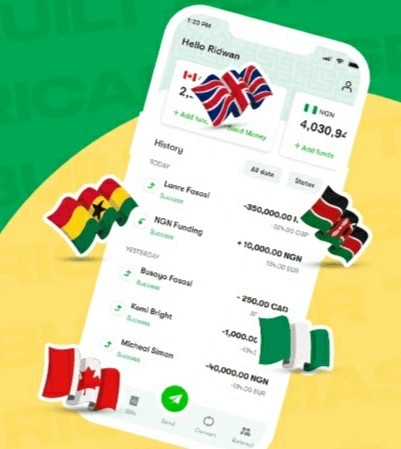
Image credit:Google
The company’s community-first approach meant that its products were specifically designed for immigrants, not generic users, addressing pain points that other fintechs overlooked. The acquisition of UK credit-fintech Pillar in 2024 allowed LemFi to provide credit services to newcomers who often have no local credit history, a feature that significantly increased its value to users. Furthermore, by integrating directly with local banks and mobile money providers such as M-Pesa and OPay, LemFi achieved near-instant delivery, meeting the gold standard for speed that diaspora communities expect and rely on.
Conclusion
LemFi has proven that a fintech platform built with empathy and insight can not only survive but thrive in a complex, global market. By addressing the specific needs of migrants and diaspora communities, speedy transfers, zero fees, multi-currency wallets, and access to credit “LemFi” has become more than an app; it is a financial lifeline for millions who have historically been underserved by traditional banks.
Its relevance today goes beyond simple remittances. In an era where cross-border work, digital freelancing, and global mobility are the norm, LemFi bridges the gap between continents and currencies, allowing users to send, receive, and manage money seamlessly as part of their everyday lives.