

Moove is officially a unicorn.
The Nigerian-founded mobility company announced on Wednesday, August 5, that it has raised $250 million in a Series C funding round at a $2.1 billion valuation, making it Africa's newest billion-dollar tech company and the continent's first autonomous mobility unicorn.
The round was led by Abu Dhabi's Mubadala Investment Company, with Woven Capital (Toyota's growth-stage venture fund) and Ion Pacific as co-leads. Additional backers include BlackRock, MUFG, Franklin Templeton, Uber, BlueCrest Capital Management, Left Lane, Endeavor Catalyst, and the Ontario Power Generation Pension Plan, among others.
The announcement confirms what industry watchers had anticipated. Speaking to The Nxt Box earlier during a yearly second half check, Faith Omoniyi, Head of Content at Briter, said: "After Moniepoint, it is Moove. If they raise their next round, they might raise at a billion valuation, and that earns them unicorn status." The round closed before the week was out.
From 76 Vehicles in Lagos to 42,000 Across 14 Countries
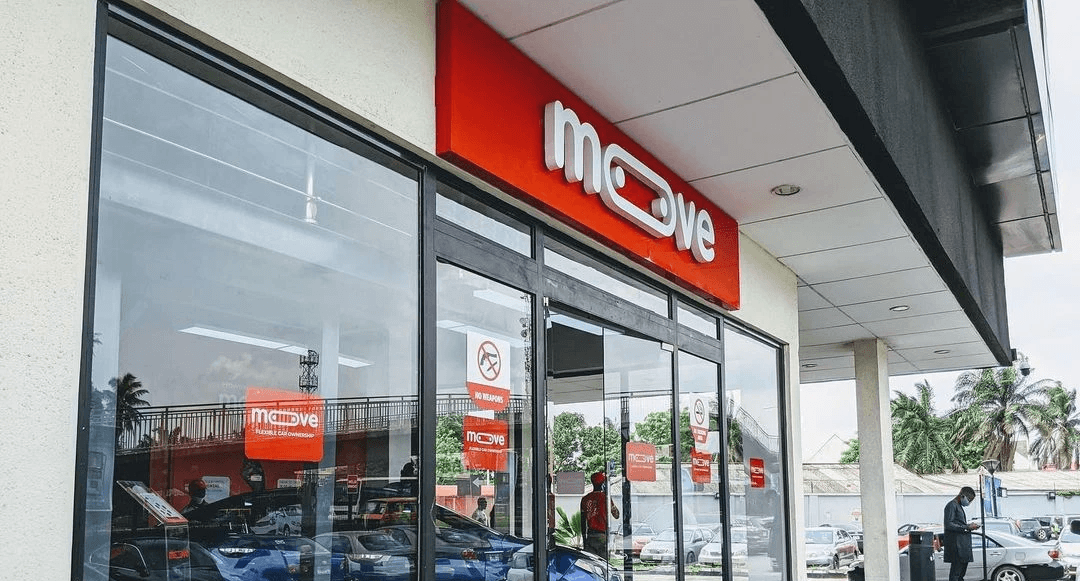
Moove was founded in Lagos in 2020 by Ladi Delano and Jide Odunsi with 76 vehicles and a straightforward mission: help ride-hailing and delivery drivers in Africa access vehicles they could not afford through traditional lenders.
The model filled a real gap. Across African economies, gig workers and independent drivers with stable earnings were routinely excluded from formal credit systems. Moove offered revenue-based financing tied directly to what drivers earned, making it both practical and scalable.
Six years later, the company operates a fleet of approximately 42,000 vehicles across 14 countries, employs 3,300 people globally, and generates $420 million in annual recurring revenue. It has expanded through organic growth and acquisitions, including Kovi in Brazil and Tokyo Taxi in Japan, and is now headquartered in Dubai.
Its traditional mobility business is on track to achieve full profitability this year.
The Pivot Nobody Fully Saw Coming
What makes Moove's unicorn moment particularly significant is not the valuation alone. It is what the company has become.
Beginning in 2023, Moove moved deliberately into autonomous vehicle fleet operations, evaluating the emerging robotaxi industry and identifying a gap nobody else was filling. AV developers, vehicle manufacturers, ride-hailing marketplaces, and consumers all had roles in the autonomous mobility ecosystem. None of them wanted to own and manage the vehicles.
Moove did.
"Who owns the vehicle? Who operates the vehicle? Who orchestrates the vehicle? Who does the servicing, the maintenance?" co-founder and co-CEO Ladi Delano told TechCrunch. "It became clear that Moove's experience managing large fleets and providing financing could translate to autonomous vehicle operations."
The company now serves as the fleet operator for Waymo in Phoenix, Miami, and Las Vegas, with London next. It intends to eventually purchase robotaxis outright using debt financing, with a long-term vision of owning hundreds of thousands of autonomous vehicles globally.
Part of the new capital will go toward developing what Moove calls "Nests": automated, robotics-first depot facilities where autonomous fleets will be charged, serviced, and maintained around the clock. The company currently has about 15 depots in various stages of development.
The funding will also support the hiring of approximately 350 people to scale the autonomous vehicle side of the business.
What This Means for African Tech
Moove is only the second African startup to confirm unicorn status since 2023, following Moniepoint's milestone in late 2024. Both crossings came during a period of tighter global venture capital, which makes each one carry more weight than the cluster of unicorns that emerged during the 2021 funding boom.
Samson Akintaro, Tech Analyst at Nairametrics, had told The Nxt Box earlier that Moove's valuation was estimated at $750 million and that it was among the startups most likely to cross the billion-dollar line. The Series C confirmed it, and then more than doubled it.
The company's trajectory also reinforces a broader argument about what Africa's next wave of significant tech businesses looks like. Moove did not build a consumer app. It built infrastructure: financing rails, fleet management systems, depot logistics, and now autonomous vehicle operations. That is a different kind of ambition from the fintech-dominated unicorn generation that preceded it, and investors are clearly responding to it.
So Now Who's Next?
Moove's confirmation raises the pressure on the rest of Africa's soonicorn pipeline.
PalmPay, the Nigerian digital banking platform, sits closest to the threshold with a valuation estimated at $800 million to $900 million and ongoing talks to raise additional funding that could tip it over. Spiro, the electric motorcycle startup operating across francophone Africa, has raised approximately $270 million and is drawing similar predictions from analysts. Yassir, the Algerian super app, may have already crossed $1 billion following a 2025 internal round, though it has not confirmed this publicly.
Beyond valuations, the broader question the Moove milestone reopens is whether Africa's soonicorn pipeline is strong enough to sustain the momentum. After years of a funding slowdown, two unicorns in under a year suggests the answer may be yes.
"Funding levels are normalizing," Omoniyi, told The Nxt Box. "We have gone past that funding dip. And we are now seeing almost 50% of funds into African startups coming from VCs headquartered on the continent. As more local capital grows, it can support these businesses and help build more resilient ones."
For a continent that produced most of its unicorns in one compressed boom period between 2020 and 2022, having new ones emerging in a tighter, more disciplined investment climate may matter more than the numbers alone.